
How Much Does It Cost to Charge an Electric Van in the UK? (2026 Guide)

Charging an electric van in the UK can cost anywhere from around £5 to more than £50 for a full charge, depending on its battery size, where you charge and your electricity tariff.
For a van with a 60kWh battery, charging at home using the average domestic electricity rate costs approximately £17.55, including an allowance for charging losses. The same charge at a public rapid charging station could cost approximately £52.67.
For businesses operating multiple electric vans, these differences can have a significant impact on annual running costs. Installing dedicated commercial EV Chargers at your workplace or depot could help reduce reliance on more expensive public charging facilities.
In this guide, we explain what it costs to charge an electric van in 2026, compare home, public and workplace charging, and explore how businesses can manage their electric vehicle charging expenditure.
How Much Does It Cost to Fully Charge an Electric Van?
The cost of charging an electric van depends primarily on two things: the amount of electricity the battery needs and the price paid per kilowatt-hour (kWh).
Electricity is typically charged per kWh, making it relatively straightforward to estimate how much a full charge will cost.
For example, a 60kWh battery charged at 25p per kWh would theoretically cost £15 to charge from empty to full.
However, some electricity is lost during the charging process. For the following calculations, we've assumed 90% charging efficiency, meaning approximately 10% of the electricity drawn from the charger is lost before reaching the battery.
Electric Van Charging Cost Comparison: UK 2026
Battery size | Home charging | Workplace charging | Public standard | Public rapid |
40kWh | £11.70 | £8.89 | £24.00 | £35.11 |
50kWh | £14.62 | £11.11 | £30.00 | £43.89 |
60kWh | £17.55 | £13.33 | £36.00 | £52.67 |
75kWh | £21.93 | £16.67 | £45.00 | £65.83 |
90kWh | £26.32 | £20.00 | £54.00 | £79.00 |
Rates used:
Home charging: 26.32p/kWh
Workplace charging: 20p/kWh (illustrative)
Public standard charging: 54p/kWh
Public rapid charging: 79p/kWh
The home rate is based on Ofgem's October–December 2026 electricity price cap. Public charging rates come from Zapmap's September 2026 Charging Price Index.
The workplace rate is an example, not an average commercial electricity price. Actual business tariffs vary according to energy contracts and premises.
These estimates assume charging from 0–100% of the stated usable battery capacity, with 90% charging efficiency. They exclude fixed standing charges, installation costs, parking fees and other potential charges. VAT treatment also differs between electricity supplies.
In practice, most drivers won't regularly charge from completely empty to full. Charging requirements will depend on daily mileage and how much battery capacity remains.
How Much Does It Cost to Charge an Electric Van at Home?
Home charging can be one of the most affordable ways to operate an electric van, particularly for tradespeople and business owners who take their vehicles home overnight.
Under Ofgem's October–December 2026 price cap, the average electricity unit rate for a household on a standard variable tariff paying by Direct Debit is 26.32p per kWh.
Using this rate, a 60kWh electric van battery would cost around £17.55 to charge from empty to full after accounting for charging losses.
However, some households may be able to reduce this further by using a dedicated EV electricity tariff.
Can Overnight Charging Reduce Costs?
Certain electricity suppliers offer cheaper electricity during designated overnight hours.
For example, if a household had access to an off-peak rate of 8p per kWh, charging the same 60kWh battery would cost approximately £5.33.
That represents a substantial difference compared with standard domestic charging.
However, cheaper overnight tariffs often come with conditions, including limited charging windows, compatible equipment or different daytime electricity rates.
For businesses with employees taking electric vans home overnight, it is also worth considering how charging costs will be reimbursed and accurately recorded.
Although home charging can work well for individual vehicles, businesses with several vans may benefit from a more centralised charging arrangement.
How Much Does It Cost to Charge an Electric Van at a Public Charging Station?
Public charging provides flexibility for electric van drivers who travel longer distances, work across several locations or cannot access charging facilities at home or work.
However, it can be considerably more expensive than charging using a suitable domestic or commercial electricity tariff.
According to Zapmap's September 2026 data, the average pay-as-you-go public charging prices were:
54p per kWh for standard and standard-plus charging.
79p per kWh for rapid and ultra-rapid charging.
For a 60kWh electric van battery, these rates represent an estimated full charging cost of £36.00 and £52.67 respectively, assuming 90% charging efficiency.
Standard vs Rapid Electric Van Charging
Standard charging is generally suitable when a vehicle can remain parked for several hours, such as during a working day or overnight.
Rapid charging is more appropriate for drivers who need to replenish their battery while travelling between jobs or completing longer routes.
The main advantage of rapid charging is convenience. However, businesses relying on it frequently may face significantly higher electricity costs.
Charging speeds also depend on the vehicle, battery temperature, current battery level and charger's output. A charger advertised at 150kW will not necessarily charge every electric van at that speed.
For businesses running predictable routes, reducing unnecessary reliance on rapid public charging can be an effective way to control expenditure.

How Much Does It Cost to Charge an Electric Van at Work?
For businesses operating electric vans, charging at their own premises can provide greater control over running costs, vehicle availability and charging schedules.
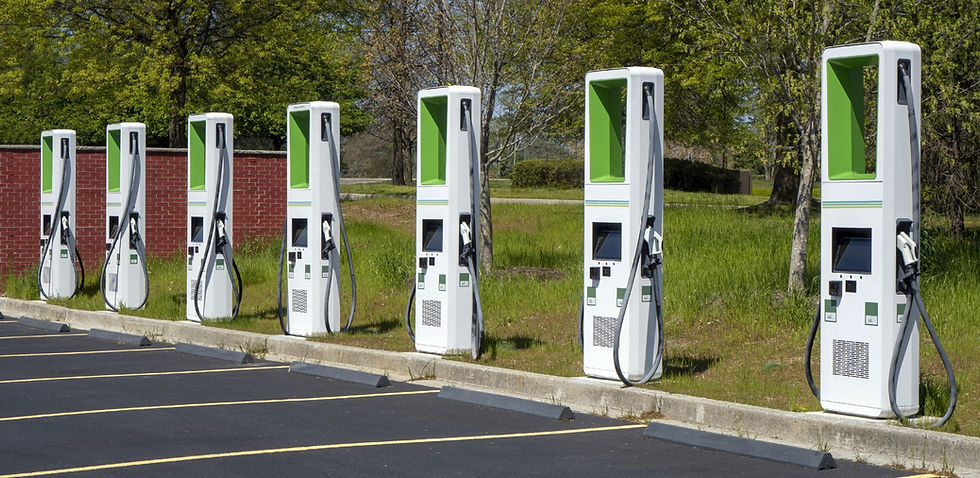
Instead of depending on public charging networks, companies can install dedicated commercial EV charging points at offices, warehouses, industrial units or fleet depots.
This allows vehicles to be charged during periods when they are not in use, particularly overnight.
Example: Workplace Electric Van Charging Costs
Consider a business using a commercial electricity tariff of 20p per kWh.
Charging a van with a 60kWh battery from empty to full would cost approximately £13.33, assuming 90% efficiency.
Using the public rapid charging average of 79p per kWh, the equivalent charge would cost approximately £52.67.
That represents a difference of more than £39 per full charge.
For a business operating several electric vans, these differences can quickly accumulate.
Of course, workplace charging isn't automatically cheaper in every situation. The business must consider its commercial electricity contract, existing electrical capacity, installation costs and any ongoing maintenance requirements.
Nevertheless, suitable on-site charging infrastructure can help businesses manage how and when their vehicles are charged.
Why Businesses Are Investing in Commercial EV Chargers
Dedicated workplace charging offers several operational advantages.
Greater control over charging costs
Businesses can explore commercial electricity tariffs, schedule charging and monitor energy consumption.
Improved vehicle availability
Electric vans can be charged while parked overnight, helping ensure they are ready for the following working day.
Less reliance on public charging
Drivers may spend less time looking for available chargers or making unnecessary stops during working hours.
Better fleet management
Some commercial charging systems provide monitoring, access controls and usage reporting, helping businesses understand charging patterns and expenditure.
Future expansion
A properly planned installation can consider the potential need for additional chargers as a company's electric fleet grows.
Businesses considering on-site charging can explore Lyons Electrical's commercial EV charger installation services, which include assessing premises, designing appropriate solutions and installing charging infrastructure.

How Much Does an Electric Van Cost to Charge Per Mile?
The cost per mile is often a more useful comparison than the cost of fully charging a battery.
This is because electric vans have different battery capacities, driving ranges and energy efficiency figures.
To calculate charging cost per mile, divide the electricity cost per kWh by the number of miles travelled per kWh, allowing for charging losses where appropriate.
Consider an electric van achieving 2.5 miles per kWh from its battery. Travelling 100 miles would require approximately 40kWh of battery energy.
With 90% charging efficiency, replacing that energy would require approximately 44.44kWh from the charger.
Electric Van Charging Cost Per 100 Miles
Charging method | Cost per 100 miles |
Home overnight at 8p/kWh | £3.56 |
Workplace at 20p/kWh | £8.89 |
Standard home tariff at 26.32p/kWh | £11.70 |
Public standard at 54p/kWh | £24.00 |
Public rapid at 79p/kWh | £35.11 |
Actual energy consumption will depend on factors such as vehicle size, payload, speed, road conditions, weather and heating or air conditioning usage.
A heavily loaded electric delivery van travelling at motorway speeds may consume considerably more electricity than a lightly loaded van operating shorter urban routes.
For businesses, understanding real-world energy consumption is particularly important when planning charging infrastructure and estimating fleet costs.
Electric Van vs Diesel Van: Which Is Cheaper to Run?
One of the main reasons businesses consider switching to electric vans is the potential to reduce fuel expenditure.
However, whether electric or diesel is cheaper depends heavily on how the vehicle is used and where it is charged.
For a fair comparison, we'll use the following illustrative assumptions:
Electric van:
Efficiency: 2.5 miles per kWh
Charging efficiency: 90%
Workplace charging rate: 20p/kWh
Diesel van:
Fuel economy: 35mpg (UK imperial gallons)
Diesel price: £1.993 per litre
Annual Electric Van vs Diesel Fuel Costs
Annual mileage | Electric van (workplace) | Diesel van | Estimated difference |
10,000 miles | £889 | £2,588 | £1,699 |
15,000 miles | £1,333 | £3,883 | £2,550 |
20,000 miles | £1,778 | £5,177 | £3,399 |
Under these assumptions, the electric van offers considerably lower energy costs when charged at the business premises.
However, if the electric van relied entirely on public rapid charging at 79p per kWh, its electricity expenditure would be approximately £5,267 over 15,000 miles. This would actually exceed the illustrative diesel fuel cost.
This demonstrates why charging arrangements are an important consideration for businesses evaluating electric vehicles.
These comparisons cover energy or fuel expenditure only, using stated retail or illustrative rates. They do not represent a full total-cost-of-ownership comparison and do not adjust for differences in recoverable VAT.
Vehicle purchase prices, maintenance, insurance, taxation, depreciation and charger installation costs should also be considered.
How Much Could a Business Save by Charging Electric Vans at Its Own Premises?
To understand the potential financial impact of workplace charging, consider a hypothetical Kent business operating a fleet of five electric vans.
Each vehicle travels approximately 15,000 miles annually, giving a combined annual fleet mileage of 75,000 miles.
Assuming each van achieves 2.5 miles per kWh, the fleet requires 30,000kWh of usable battery energy each year.
Allowing for 10% charging losses, approximately 33,333kWh must be purchased.
Scenario 1: Charging at a Business Depot
With an illustrative commercial electricity rate of 20p per kWh:
Annual electricity expenditure: approximately £6,667.
Scenario 2: Relying on Public Rapid Charging
Using the September 2026 public rapid charging average of 79p per kWh:
Annual electricity expenditure: approximately £26,333.
Potential Annual Electricity Cost Difference
Fleet charging scenario | Annual electricity cost |
Workplace charging | £6,667 |
Public rapid charging | £26,333 |
Illustrative difference | £19,667 |
In this example, charging at the business premises would reduce annual electricity expenditure by nearly £20,000 compared with relying entirely on public rapid charging.
This is an illustrative comparison rather than a guaranteed saving. Real fleets often use a combination of charging methods, and commercial tariffs vary.
The calculation also excludes the cost of installing and maintaining charging infrastructure, potential capacity upgrades, fixed electricity charges and differing VAT recovery arrangements.
Nevertheless, it shows why businesses should consider charging infrastructure alongside the purchase of electric vehicles.
For a company operating multiple vans, the right charging strategy can make a substantial difference to long-term operating expenditure.

What Should Businesses Consider Before Installing Commercial EV Chargers?
Installing commercial charging points involves more than choosing a charger and connecting it to an electricity supply.
Businesses should consider how their vehicles operate, the available electrical infrastructure and potential future requirements.
1. Number of Vehicles and Daily Mileage
A business operating two electric vans will have very different charging requirements from a company managing a fleet of twenty.
Understanding daily mileage helps determine how much electricity needs to be delivered and how long vehicles can remain connected.
2. Charger Speed and Capacity
Commercial EV chargers are available with different power outputs.
For many businesses, AC charging systems may provide sufficient capacity for vehicles parked overnight.
Operations involving high daily mileage, short turnaround times or larger vehicles may require faster charging arrangements.
The most appropriate choice depends on vehicle compatibility and operational needs.
3. Existing Electrical Infrastructure
Before installing chargers, the electrical supply must be assessed to determine whether the premises can support the additional load.
Some installations may require electrical upgrades or discussions with the local electricity network operator.
This is particularly important when several vehicles could be charging simultaneously.
4. Smart Charging and Load Management
Smart charging systems can help businesses control when electricity is used and manage how power is distributed between multiple chargers.
Load management can be particularly valuable where the available electrical capacity is limited.
It may help reduce demand peaks and, depending on the installation, avoid or postpone certain infrastructure upgrades.
5. Future Fleet Expansion
Installing sufficient infrastructure for current requirements is important, but businesses should also consider future demand.
Planning cable routes, electrical capacity and charger locations at the outset may make subsequent expansion easier.
6. Ongoing Maintenance
Commercial charging equipment should be installed correctly and maintained in accordance with manufacturer requirements and relevant electrical standards.
Businesses should consider ongoing support, inspections and fault response when selecting an installation provider.
Are There Government Grants for Commercial EV Chargers?
Yes. Eligible UK businesses can apply for support through the Government's Workplace Charging Scheme.
As of October 2026, the scheme provides funding towards the purchase and installation of eligible workplace charging points.
The grant can cover up to 75% of eligible purchase and installation costs, capped at £500 per socket, with support available for up to 40 sockets across an applicant's sites.
The scheme is currently scheduled to run until 31 March 2027, subject to the published eligibility and application requirements.
Businesses must meet the relevant criteria, and applications and installations must follow the scheme's rules.
Full details are available through the Government's Workplace Charging Scheme guidance.
Businesses considering installation should review the current eligibility requirements before committing to a project.
How to Reduce Electric Van Charging Costs for Your Business
Whether a business operates one electric van or an entire fleet, several practical steps can help control charging expenditure.
Review electricity contracts. Compare commercial energy rates and investigate whether an alternative tariff would better suit overnight vehicle charging.
Make better use of downtime. Where operationally practical, charging vehicles while parked overnight may reduce dependence on public facilities.
Consider dedicated workplace chargers. On-site charging can provide greater control over electricity usage and charging schedules.
Use smart charging technology. Appropriate systems can help manage power distribution and charging times.
Monitor vehicle efficiency. Tracking electricity consumption and mileage helps businesses understand actual running costs.
Plan routes carefully. Reducing unnecessary mileage and avoiding inefficient journeys can help improve energy efficiency.
Prepare for future demand. Businesses expecting to expand their electric fleet should consider potential future charging requirements during the initial installation.
Frequently Asked Questions About Electric Van Charging
How much does it cost to charge an electric van overnight?
A 60kWh electric van battery would cost approximately £5.33 to charge from empty to full on an illustrative overnight tariff of 8p per kWh, assuming 90% charging efficiency. Actual costs depend on the electricity tariff and energy used.
Is it cheaper to charge an electric van at home or at work?
Either can be cheaper, depending on the available tariffs. Some domestic off-peak tariffs offer particularly competitive rates, while commercial workplace charging may provide advantages for businesses operating multiple vehicles.
How much does it cost to charge an electric van for 100 miles?
Assuming an efficiency of 2.5 miles per kWh and 90% charging efficiency, 100 miles costs approximately £8.89 at a workplace electricity rate of 20p per kWh, or £35.11 using public rapid charging at 79p per kWh.
Can businesses install electric van chargers at their premises?
Yes. Many workplaces, warehouses, industrial units and commercial premises can accommodate EV charging infrastructure, subject to suitable electrical capacity, site conditions and any necessary permissions.
What is the cheapest way to charge a fleet of electric vans?
For many businesses, a competitively priced commercial electricity contract combined with appropriately managed depot charging can be cost-effective. However, the most economical solution depends on operating patterns, energy tariffs and infrastructure costs.
How long does it take to charge an electric van?
Charging time depends on battery capacity, charger output, vehicle charging capability and battery state of charge.
For example, a 60kWh battery charging from empty to full using a compatible 7kW AC charger could take approximately 9–10 hours under suitable conditions. Faster charging systems may reduce charging time significantly.
Are there grants available for workplace EV charging?
Yes. Eligible businesses can receive financial support through the Workplace Charging Scheme. As of October 2026, funding can cover up to 75% of eligible installation costs, with a maximum contribution of £500 per socket.
Commercial EV Charging Installation with Lyons Electrical
Switching to electric vans can offer businesses an opportunity to reduce running costs, but choosing the right charging arrangements is essential.
While public charging provides flexibility, businesses operating multiple electric vehicles may benefit from installing dedicated charging infrastructure at their own premises.
At Lyons Electrical, we help businesses across Kent and the surrounding areas plan, install and maintain commercial EV charging solutions tailored to their operational requirements.
Whether you're introducing your first electric van, expanding an existing fleet or planning charging infrastructure for your commercial premises, our team can assess your requirements and recommend a suitable solution.
Considering commercial EV charging for your business?
Explore our commercial EV charger installation services or contact Lyons Electrical on 01634 290000 to discuss your requirements.

Comments